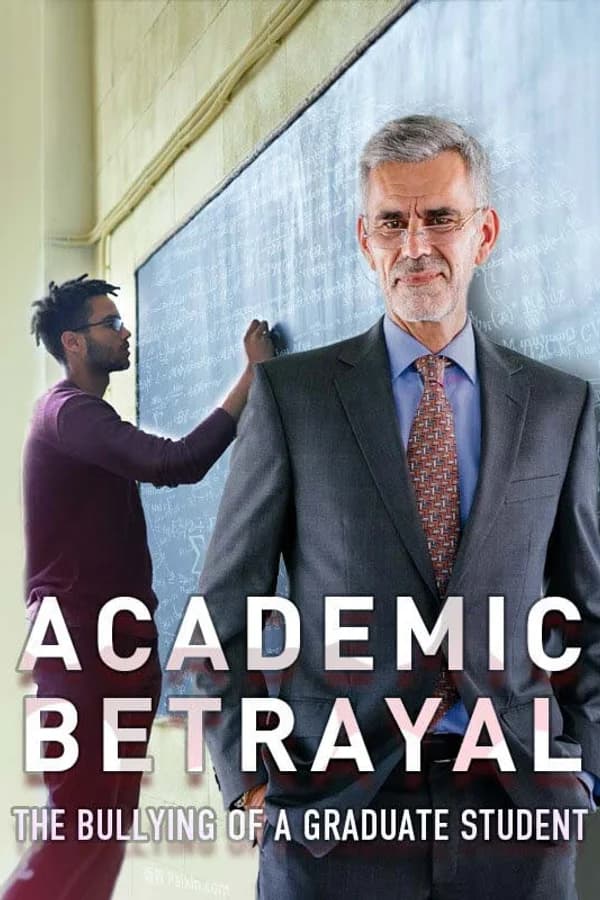
Academic Betrayal: The Bullying of a Graduate Student
By: Loren Mayshark
Academic Betrayal: The Bullying of a Graduate Student is a completed urban novel by Loren Mayshark with 20 chapters, available to read online on Daisy Novel. Latest chapter added January 12, 2023.
Synopsis
Read the first chapter
Chapter 1: Introduction
Maybe you’ve heard some version of this “Life 101” lesson from a teacher, parent, or mentor: “You get out what you put in.” Well, that isn’t always the case. When I entered Hunter College as a nonmatriculated student in the fall semester of 2008 I was eager to begin their master’s program in history because I wanted to be a college professor. I believed that teaching was the best way for me to find a career, using my unique abilities; it would allow me to positively affect the world. I believed that my place in the world would be more fulfilling if I pursued this altruistic path.
Six years and tens of thousands of dollars later, I left Hunter without a degree. I attended the thirty-credit program continuously for more than half a decade, and paid for more than the thirty credits required for the degree. While in the program I maintained better than a 3. 6 GPA. And I walked away with nothing. My situation may seem extreme, but after extensive research and speaking to numerous people in higher education, I have come to the conclusion that my situation serves as a microcosm of what is happening to higher education in the United States.
When I read “How America’s Great University System Is Getting Destroyed,” which is a transcript of Chomsky’s remarks to a gathering of the Adjunct Association of the United Steelworkers in Pittsburg, Pennsylvania, I was astonished by the parallels between his assessment of the trend toward the corporatization of education and the collateral ills of our education system (specifically higher education). Chomsky, who has spent nearly his whole life as a student or teacher, has seen the university system greatly altered during his tenure. He begins his discussion of the situation by explaining that the corporate business model is “designed to reduce labor cost and to increase labor servility.”{{ Noam Chomsky. “How America’s Great University System Is Being Destroyed” (lecture, Adjunct Faculty Association of the United Steelworkers, Pittsburgh, PA, February 4, 2014). http://www. alternet. org/corporate-accountability-and-workplace/chomsky-how-americas-great-university-system-getting. Accessed January 1, 2017.}}This model works by pushing the costs onto the consumer, which in the case of higher education means the students. As Chomsky explains, this is part of a wider movement to separate the population into two groups: the “plutonomy” and the “precariat.” The uber-wealthy thrive upon the precarious position of the “precariat” workers, who are so insecure in their livelihoods that they will not dare to strike or ask for additional benefits because of the risk of weakening their position. This is intended so they will better serve their masters. Alan Greenspan considered this vital to a thriving economy because of the power it transfers into the hands of corporations. This is exactly what Hunter College and many institutions like it have instituted: a system that preys upon students. Unfortunately, the problems in higher education are not limited to professors; the problems are part of a system that starts with our national attitude toward education in general. This disposition, when filtered through institutions of higher education such as Hunter College, cause great challenges for faculty working in the system. These issues ultimately trickle down to the students. Some of the major problems with higher education in the US can be seen in the bureaucratic machinations of the institution.
Some colleges have become establishments that no longer thrive on education, but rather on the suffering, expense, toil, and insecurity of their students, as well as the insecure faculty and staff. Most of the professors I enjoyed at Hunter were adjuncts. They were interesting professors, and some of the finest educators at the institution. They were also the ones who expressed their distaste for aspects of Hunter and the people in charge of the department. So it is often not the people with a love of teaching and reverence for education who generally make it into positions of power at Hunter. It is people with the most guile, the career-oriented professionals, who reinforce the cold policies of their paymasters. As a result, everyone below the top tier suffers, and so does the educational integrity of the institution.
Chapter list
20 chapters4 years ago
4 years ago
4 years ago
4 years ago
4 years ago
4 years ago
4 years ago
4 years ago
4 years ago
4 years ago
4 years ago
4 years ago
4 years ago
4 years ago
4 years ago
4 years ago
4 years ago
4 years ago
4 years ago
4 years ago
You may also like
Urban





Sign in to join the discussion